In another academic life, I might have become a historian of China. I studied Mandarin in high school in Singapore, spent a year between high school and university at Beijing Foreign Studies University, and returned to Beijing during my junior year of college. As an undergraduate, I minored in Chinese. I majored in History and focused primarily on Chinese history. Although I also spent time in Indonesia during this period, it was only in my senior year of undergrad that my scholarly attention shifted more decisively toward Southeast Asia. Even then, my undergraduate thesis examined Chinese–Malay interactions in nineteenth- and early twentieth-century British Malaya. And while I am now firmly in the camp of Southeast Asian history, I have never fully set aside this earlier interest. I continue to engage with Chinese language and history, particularly through Chinese and Hong Kong film. Watching Mandarin-language cinema helps me maintain some understanding of the language, even if Cantonese-language films remain largely beyond my comprehension.
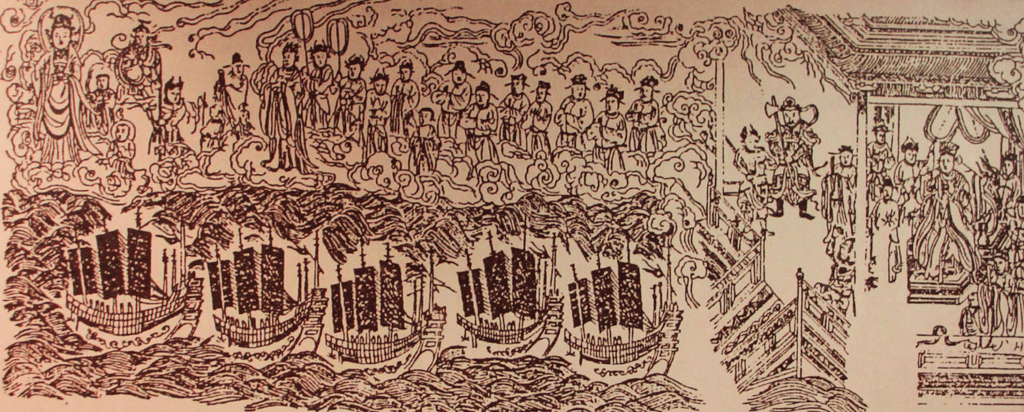
Fortunately, the study of Southeast Asia itself invites scholars to pursue interests in other regions. For millennia, Southeast Asia has been traversed by merchants, holy men, adventurers, diplomats, and settlers from across the globe, including China, India, the Middle East, and Europe. Making sense of Southeast Asian history often demands at least a working familiarity with these interconnected worlds.
In the case of China, for example, the expansion of the Han Dynasty (202 BCE – 220 CE) into what is now southern China and northern Vietnam introduced new actors and commodities into regional exchange networks, while also shaping patterns of migration into mainland Southeast Asia, including those of Tai-speaking populations. The Mongol-dominated Yuan Dynasty (1271 – 1368) launched major invasions into Vietnam, Myanmar, and Java. Later, the early Ming Dynasty (1368 – 1644) launched several treasure voyages, initially under the command of Admiral Zheng He, which travelled across much of Southeast Asia and even reached the Middle East and the eastern coast of Africa. The collapse of the Ming Dynasty in the mid-seventeenth century then significantly reduced demand for key Southeast Asian commodities such as sandalwood for decades. And these are only a few considerations. As a historian of Southeast Asia, I find ample room to sustain my enduring interest in Chinese history.
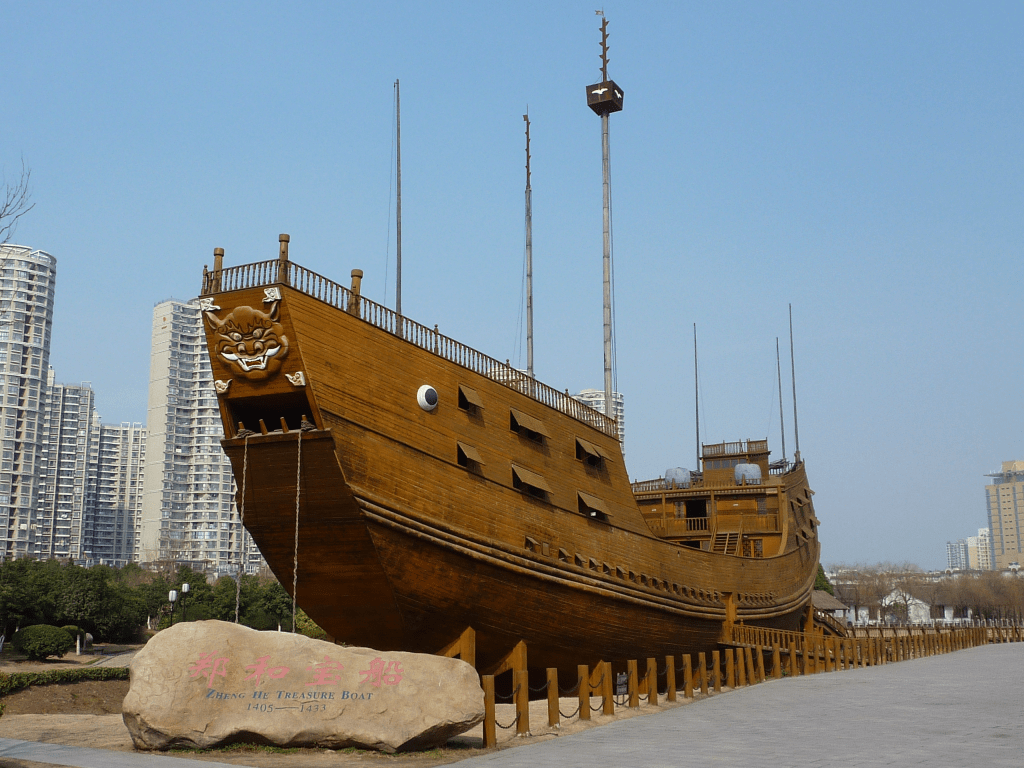
(Image: Wikimedia Commons)
Importantly, the study of premodern Southeast Asia often depends on a careful reading of Chinese sources. Chinese sailors traveled to Island Southeast Asia during distinct periods of expansion and elevated commerce, and officials in major port cities periodically interviewed returning travelers and compiled accounts of foreign lands. Court records in the imperial capital likewise document the arrival of embassies from across the region. Many of these sources (though by no means all) have survived, and some have been translated and made accessible, particularly in the digital age. Some of my favorites include:
Maritime Asia in the Third Century CE translated and edited by Andrew Chittick
A Chinese Gazetteer of Foreign Lands translated and edited by Shao-yun Yang
Southeast Asia in the Ming Shi-lu translated and edited by Geoff Wade
My particular interest lies in what these sources reveal about Southeast Asia’s eastern archipelago, that is the island world stretching between Borneo and New Guinea. In the next several posts, I will share what these and other texts say about the region, while also reflecting on the methodological challenges involved in interpreting them.
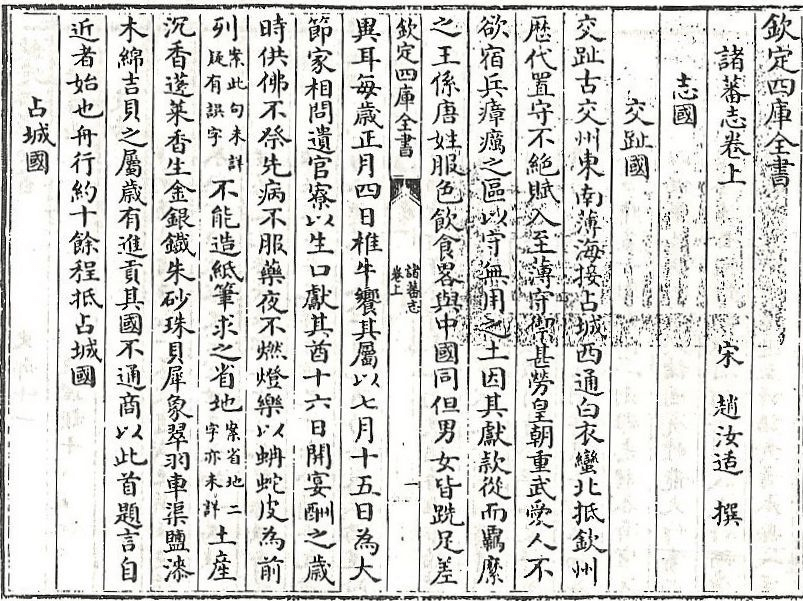
(Image: Wikimedia Commons)
Before proceeding to these posts, it’s worth laying out a few things to keep in mind. Chinese sources are incredibly valuable for studying premodern Southeast Asia, but they can also be tricky to work with, especially when it comes to geography. One major issue is how place names were recorded. Because Chinese writing is logographic rather than alphabetic, scribes often had to approximate the sounds of foreign names using characters chosen for their phonetic value. This kind of transliteration can make it hard to figure out what places those names originally referred to. In other cases, Chinese observers simply gave new, descriptive names to places they encountered. One example is 舊港 (Jiù Gǎng), which just means “Old Harbor.”
A modern parallel helps illustrate these two practices. The U.S. city of San Francisco is rendered in Chinese both as 聖法蘭西斯科 (Shèng Fǎ Lán Xī Sī Kē), a phonetic approximation, and as 舊金山 (Jiù Jīn Shān), or “Old Gold Mountain,” a descriptive name reflecting the perspective of nineteenth-century Chinese migrants during the Gold Rush. Most sites, however, just have one name.
Another example can be found in the location of my PhD alma mater University of Hawaiʻi at Mānoa. Traditionally, the name of the city of Honolulu in Chinese is 檀香山 (Tán Xiāng Shān), which translates as “sandalwood mountain”, a name reflecting the importance of Hawaiian sandalwood exports to China during the nineteenth century. Today, Honolulu is also commonly rendered phonetically as 火奴鲁鲁 (Huǒ Nú Lǔ Lǔ).
[Note: For the sake of consistency and attention to historical standards, I am using Chinese traditional characters (繁體字; 繁体字) as opposed to the simplified characters (简体字) that were adopted in the 1950s in the People’s Republic of China.]
Another complication is how modern scholars write these names today. In Southeast Asian history, scholars often transliterate Chinese characters into a romanization system that reflects modern standard Mandarin pronunciation. The characters are usually rendered into the roman alphabet using the Mandarin Chinese system of Hanyu Pinyin (漢語拼音; Hànyǔ Pīnyīn), a romanization scheme developed in the 1950s. That’s useful for consistency, but it can also be misleading. Take the early Southeast Asian polity we call “Funan,” located in the Mekong Delta (Cambodia and southern Vietnam). That name comes from the modern Mandarin pronunciation of the characters 扶南 (Fúnán).
This transliteration, however, does not reflect the pronunciation of those characters in the first half of the first millennium CE. Reconstructions of Chinese pronunciation from this period (Middle Chinese) have it transliterated as bju nom or buə̆ nəm in the Baxter and Pulleybank reconstruction systems, respectively. Here, we arrive at something that resembles the Khmer (Cambodian) word for “mountain”, pronounced bnaṃ in reconstructed proto-Khmeric. Of course, this connection is ultimately speculative.
[Note: This last point does not even address the previous and sometimes continued use of the once dominant Wade-Giles romanization scheme of Mandarin. For example, a mainland Southeast Asian polity that emerged near Funan and eventually supplanted it was recorded in Chinese sources as 真臘. Under the Wade–Giles system, these characters are rendered as Chenla, whereas in Hanyu Pinyin they are rendered as Zhēnlà. Although it has become increasingly common in Western scholarship to use the form “Zhenla”, the older rendering “Chenla” remains widespread.]
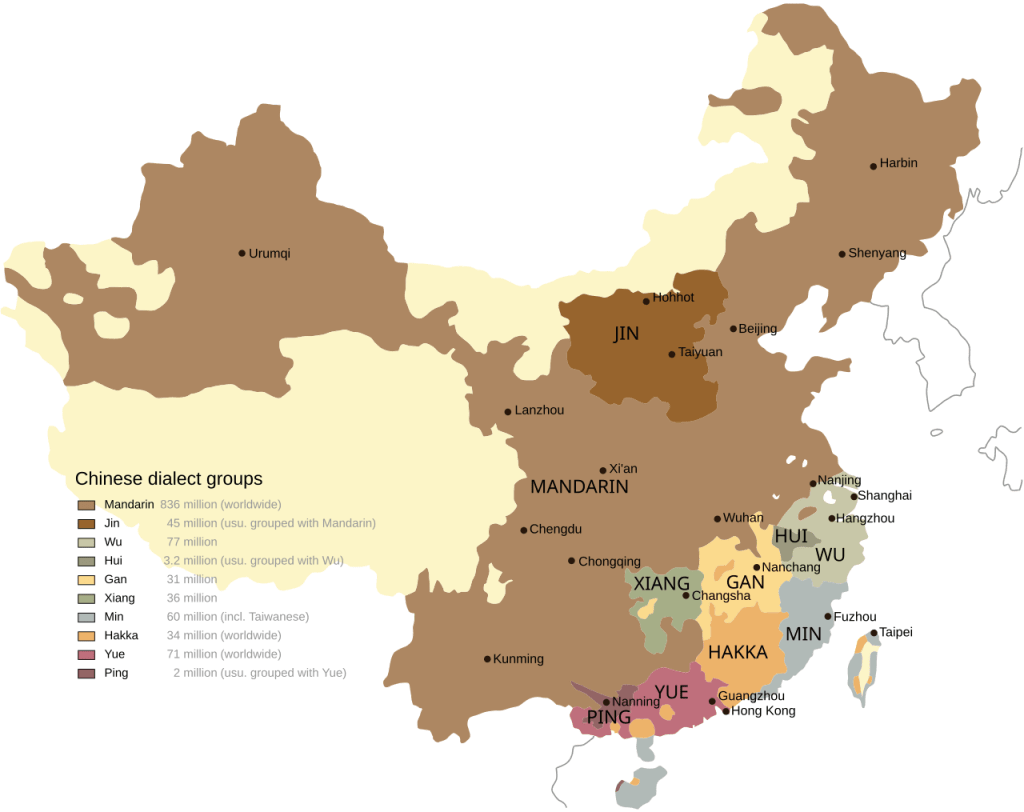
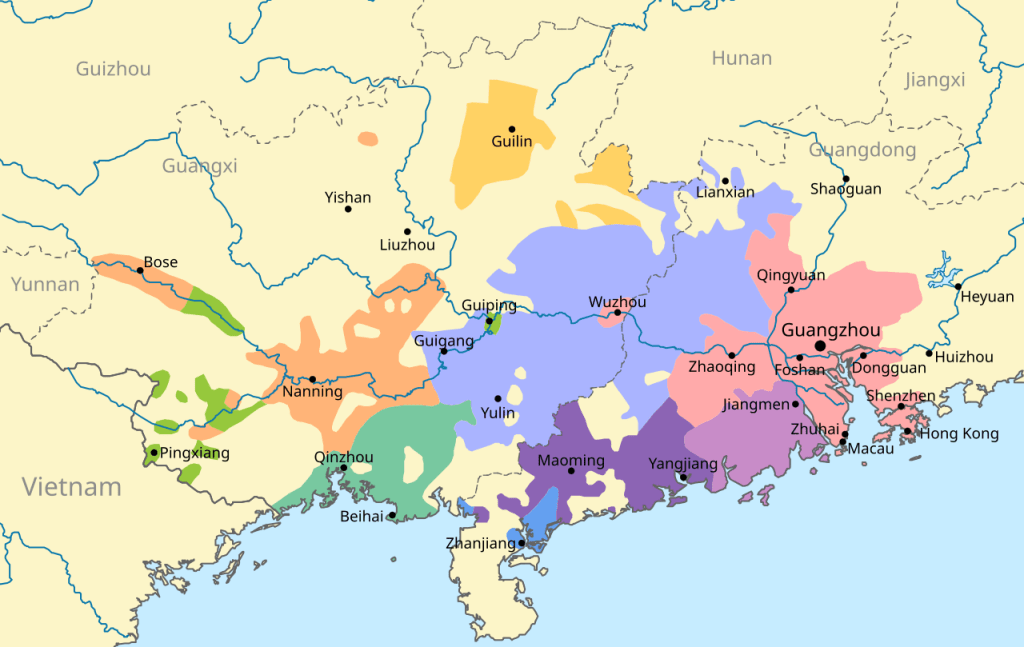
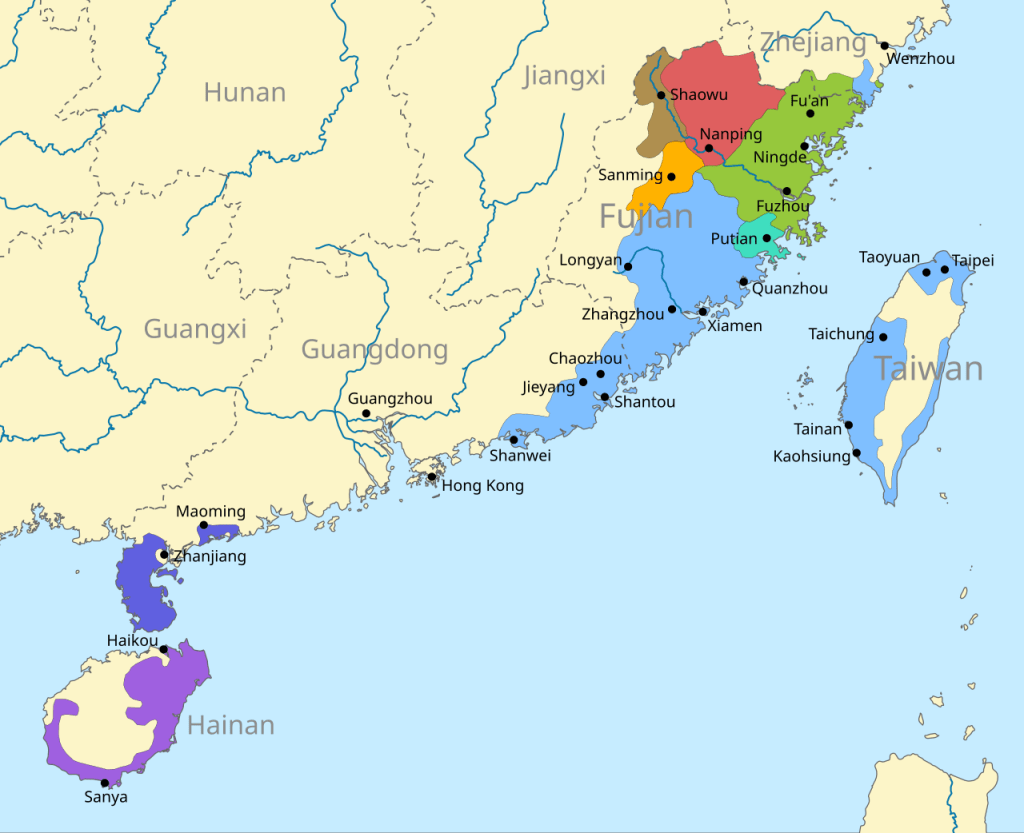
The use of modern Mandarin can also obscure the linguistic diversity of historical Chinese. “Chinese” is not a single spoken language but a family of related languages, though some prefer to call them dialects or topolects. Dialect groups of the Chinese (or Sinitic) languages include Mandarin, Yue, Southern Min, and Wu, among many others. Even within these groupings, there is considerable variation and often limited mutual intelligibility. The Yue group, for example, includes Cantonese and Taishanese, while Southern Min includes Hokkien, Teochew, and Hainanese.
Many of the sailors and merchants who traveled to Southeast Asia originated not from northern China, where Mandarin later predominated, but from the southeastern coast. By the early second millennium CE, the port city of Quanzhou (泉州; Quánzhōu) had emerged as a major hub for maritime trade with Southeast Asia. The city and its surrounding area is historically Hokkien Chinese-speaking. Moreover, sailors traveling through the port may have spoken one of several early forms of Southern Min Chinese dialects or other coastal Chinese languages, such as early Cantonese. Thus, the study of the texts from the second millennium CE must consider the pronunciation of characters in these Chinese languages.
(Image: Wikimedia Commons)
Scholars must also compare the varieties of spoken Hokkien and, sometimes Cantonese, pronunciations and consider that those spoken varieties themselves have evolved over time. These characters could also be romanized to reflect the pronunciation of Cantonese or Hokkien. Modern systems such as Jyutping (for Modern Cantonese as spoken in Guangzhou) and Pe̍h-ōe-jī (for Hokkien as spoken in Xiamen and Quanzhou) offer alternative ways of representing these pronunciations. For instance, Quanzhou (泉州) appears as Choân-chiu in Hokkien. The island-city of Xiamen (廈門) would be rended as Ē-mn̂g or Ē͘-mûi. Historically, the city was called “Amoy” by Westerners as that name better reflects the local pronunciation of the island.
(Image: Wikimedia Commons)
To make this point more clear, the Portuguese author of the mid-sixteenth century Treatise on the Moluccas states that the Chinese sailors encountered in the region refer to their country as Taybemquo. This name certainly refers to China’s Ming Dynasty (1368-1644 CE). China itself was often called “Great Ming” (大明) during this period. When we consider that “Great Ming” (大明) is transliterated in Hokkien as Tāi-bêng and in Mandarin as Dà Míng, we see that these Chinese sailors were likely Hokkien speakers.
When looking for possible references to the eastern archipelago in early Chinese sources, these different pronunciations can help scholars identify which places those names might refer to. It also raises questions about the common practice of using modern Mandarin-based names for these sites, but that’s probably a debate for people more qualified than me.
 Benjamin L. Moseley